Your Packaging Brief Is Outdated. Here's What It's Missing.
Your Packaging Brief Is Outdated. Here's What It's Missing.
There's a moment in almost every packaging project where someone says: "We'll add a QR code." It usually comes near the end, after the design is locked, after the brand story has been written, after the structural decisions have been made. It's treated like adding a phone number to a business card — a detail, not a decision.
That's the problem.
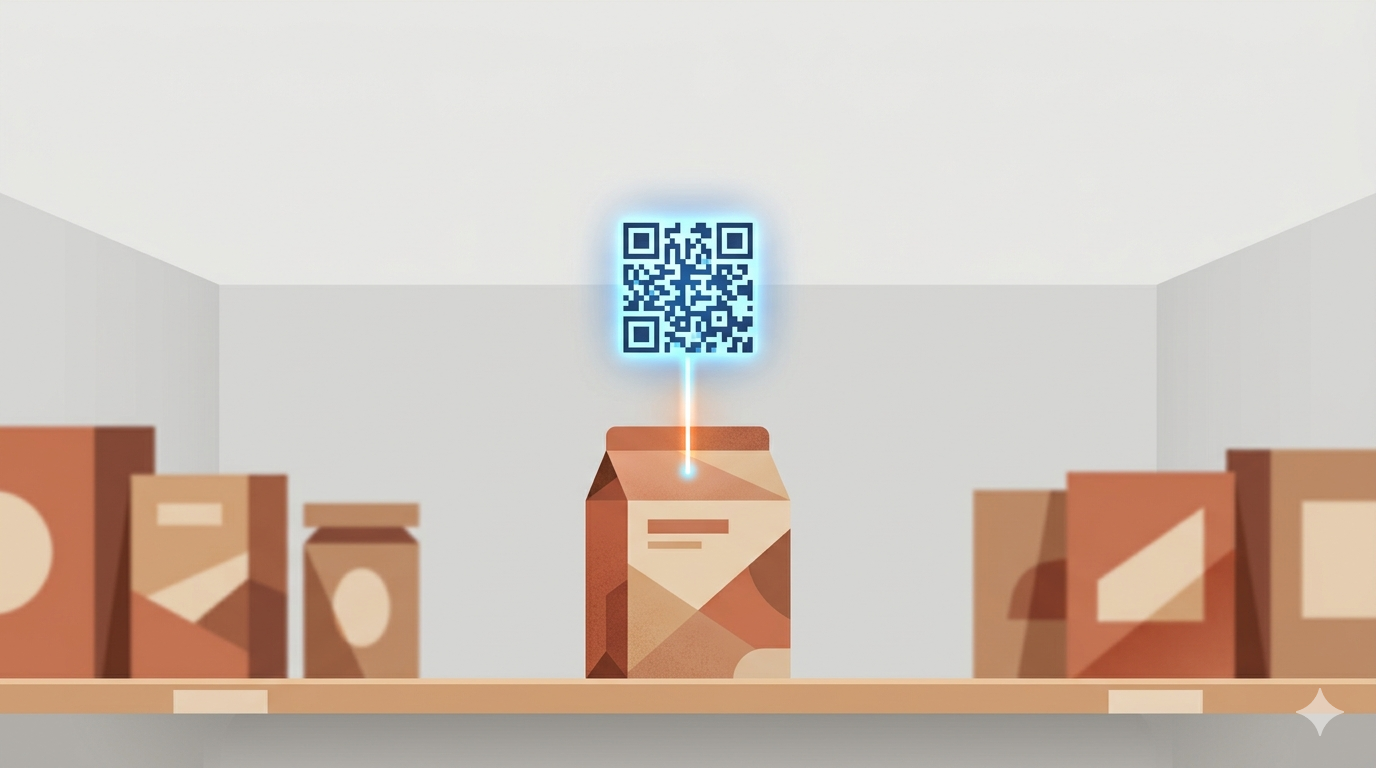
A recent FoodNavigator article highlighted how connected packaging — QR codes, RFID, NFC chips — is helping private label brands close the gap with national brands. The piece makes a compelling case. Connected packaging turns a physical product into a digital platform. It extends the brand relationship beyond the store shelf and into someone's kitchen. It can authenticate products, build loyalty, and surface traceability data that consumers increasingly want to see.
All of that is real. But there's a piece missing from that conversation, and it's the piece that most brands skip: you cannot connect what you haven't positioned.
The brief hasn't kept up
Most packaging briefs I see — and I've been reviewing them for over thirty years — are still written the same way they were written in the nineties. They cover the SKU count, the retail channel, the production specs, the substrate, and maybe a mood board. Sometimes there's a competitive audit. If the team is thorough, there's a target consumer profile.
What they rarely include is a digital layer. Not because people don't know connected packaging exists, but because they treat it as a production question rather than a strategy question. Someone in operations handles the QR code. Design handles the visual. Brand handles the messaging. And none of them are in the same room at the same time, building a coherent brief.
The result? A well-designed package with a QR code that links to a landing page nobody updates. Or worse, a product that scans as "authentic" but still feels like a store brand because the design never did the work of communicating quality in the first place.
The technology doesn't fix a brand identity problem. It amplifies whatever is already there.
What private label gets right — and still gets wrong
The FoodNavigator piece focuses on private label specifically, and that's worth sitting with. Private label has made remarkable progress over the past decade. What used to be the generic, the cheap version, the thing you hid in your cart, is now a category where retailers like Trader Joe's, Aldi, and Target's Good & Gather have built genuine consumer affection.
But here's what's still true: most private label products lack a coherent brand architecture. They have packaging. They don't have a brand.
There's a difference. A brand has a point of view. It has a consistent voice, a visual language that carries meaning, a positioning that tells someone why this product, not just what it is. Private label brands — even the sophisticated ones — often have design consistency without positioning depth. They look like a family. They don't necessarily stand for anything.
Connected packaging can help bridge that. The digital layer can carry the story, the sourcing details, the sustainability credentials, the recipe ideas. Dawn Nowicki from MRP Solutions, quoted in the article, put it well: it "turns the packaging into a service layer." That's exactly right. But a service layer on top of a weak identity is still a weak identity with a QR code on it.
The national brands that private label is trying to catch didn't build trust through technology. They built it through decades of consistent positioning, memorable design, and emotional relevance. Connected packaging accelerates the conversation. It doesn't replace the foundation.
What the new brief actually looks like
If you're planning a packaging redesign or a new product launch, here's the honest version of what your brief needs to cover now — before you talk to a designer or a technology vendor.
Brand positioning first. What does this product stand for, and for whom? Not just the category it competes in, but the emotional and functional space it occupies in someone's life. If you can't answer this clearly, no amount of packaging technology will create that clarity for you.
Visual identity that works at multiple scales. Your packaging needs to perform on the shelf, in a thumbnail on Amazon, and as a screenshot someone texts to a friend. That's three very different contexts, and the design decisions that work for one often fail for another. This should be a deliberate part of the brief, not an afterthought.
A digital experience strategy, not just a digital feature. When someone scans your QR code, what do they find? If the answer is "our website," that's not a strategy. The digital touchpoint is an extension of the brand relationship. It deserves the same strategic intention as the packaging itself — where does it live, who maintains it, how does it evolve?
Traceability as a brand story, not just a compliance tool. The regulatory pressure Nowicki mentions in the article — stronger requirements around safety, recall, ingredient sourcing — is real. But compliance and brand storytelling are not mutually exclusive. A brand that can show consumers exactly where their product came from, how it was handled, what's in it, is a brand building trust in real time. That's worth designing around, not just checking a box.
Why this matters more now than it did five years ago
Consumer skepticism is at a level that I don't think most brand owners fully appreciate. People don't automatically trust labels anymore. They read ingredients. They scan QR codes. They look up brands before they buy. They talk to each other about what they find.
At the same time, the shelf has never been more crowded. The number of SKUs competing for attention in any given category is staggering, and private label has closed enough of the quality gap that the old "national brand = better" shortcut is fading.
In that environment, connected packaging isn't a nice-to-have. It's becoming an expectation, especially in food, nutraceuticals, and anything positioned around health and wellness. But the brands that will win aren't the ones who add the most technology. They're the ones who integrate digital thinking into the packaging strategy from the beginning — where the design, the positioning, and the digital experience are built together, as one brief.
That's a different kind of conversation than most brands are having. And it usually requires a different kind of partner than the one handling your production specs.
FAQ
What is connected packaging, exactly? Connected packaging refers to packaging that uses embedded technologies — QR codes, RFID tags, NFC chips, or digital watermarks — to create a link between the physical product and a digital experience. When a consumer scans or taps the package, they can access product information, verify authenticity, trace sourcing, or engage with brand content. The technologies vary in cost and complexity, but the principle is consistent: the package becomes a doorway into a broader relationship.
Do I need connected packaging for my product? Not necessarily, but the question is worth taking seriously. If you're in a category where consumers actively want sourcing transparency (food, supplements, personal care), or where counterfeiting is a risk (beauty, spirits, pharmaceuticals), or where building post-purchase loyalty matters to your margins, connected packaging is worth evaluating. The honest answer is that the technology is becoming more accessible and less expensive, so the barrier is less about cost and more about strategy: do you have something worth connecting to?
Why does brand strategy need to come before connected packaging? Because the digital layer amplifies whatever the brand already communicates. If the packaging is unclear, uninspiring, or poorly positioned, a QR code gives consumers one more way to confirm that impression. If the brand has a clear identity and a genuine story to tell, connected packaging becomes a powerful extension of that. Strategy first, technology second — not because that's a rule, but because that's what actually works.
How should I brief a packaging redesign that includes digital elements? Start with positioning: what does this brand stand for, for whom, and why does it matter? From there, design for multiple contexts — shelf, e-commerce, social sharing. Then build the digital experience as part of the creative brief, not as a separate workstream. The best results come when the design team and the digital strategy are in dialogue from the beginning, not handed off to each other at the end.
What's the risk of investing in connected packaging without the right foundation? The practical risk is that you spend money on technology that doesn't perform — because the consumer has no reason to engage with it. A QR code that nobody scans is a feature, not a strategy. The deeper risk is that the digital layer reveals what the brand hasn't figured out yet: a landing page that doesn't match the packaging promise, or a "trace your product" feature that links to a page with no content. That erodes trust rather than building it. The investment in connected packaging is worth making — just not before the brand and design work is solid enough to support it.
Pato Fuentes is the founder of Gel, a Los Angeles–based brand strategy and packaging design agency with over thirty years of experience helping CPG brands — from pre-launch startups to Fortune 100 companies — build brands that work at every touchpoint. If you're rethinking your packaging strategy, you can reach him at pato@gelcomm.com or schedule time at calendly.com/pato-1/let-s-gel.
